
Becoming confident in substituting vegetables for one another in recipes, is one of the easiest way to maximize your experience at the farmers market or as part of a community supported agriculture (CSA) program.
You’ll save time by not having to add another thing to your grocery list and swing by the store after work to pick up the exact item you need for your recipe.
You’ll save money, because you won’t be double shopping from produce at the store, the farmers market, and through your CSA share.
You’ll save money because you won’t be letting things go to waste in your fridge before they are eaten. (and that’s better for the environment too!)
So many vegetables can be interchanged in recipes with little noticeable difference.
IMO- That’s the best part of cooking vs. baking!
Unlike baking, in which you want to follow a strict recipe and ratio of
ingredients, in cooking you can be more free flowing.
You can mix, you can match, you can omit all together.
Substituting with confidence and ease might take some time to perfect, especially as you become more familiar with vegetables that haven’t often been in your kitchen, but it’s a wonderful way to express and experience creativity.
And it’s a great way to try new vegetables, experience new flavors, and add different nutrients into your diet.
That’s why I’m sharing 3 tips with you to make substitutions with your farmers market & CSA veggies.
>>> Related: How to Love & Enjoy Root Veggies
Identify its Role in the Recipe
Different vegetables do different things in a recipe.
For instance, in many soup recipes, it often calls for you to sautee some aromatic varieties from the allium, or onion, family in an oil. Think: garlic, onions, leeks, shallots, etc.
Stir fries often call for an addition of snap peas or chopped cabbage at the end of cooking the dish to give your meal some “crunch.”
One way to start to identify what substitutions can be made is to think about what the role of the vegetable is in the recipe.
Then you can start thinking about what other vegetables would give you the same effect.
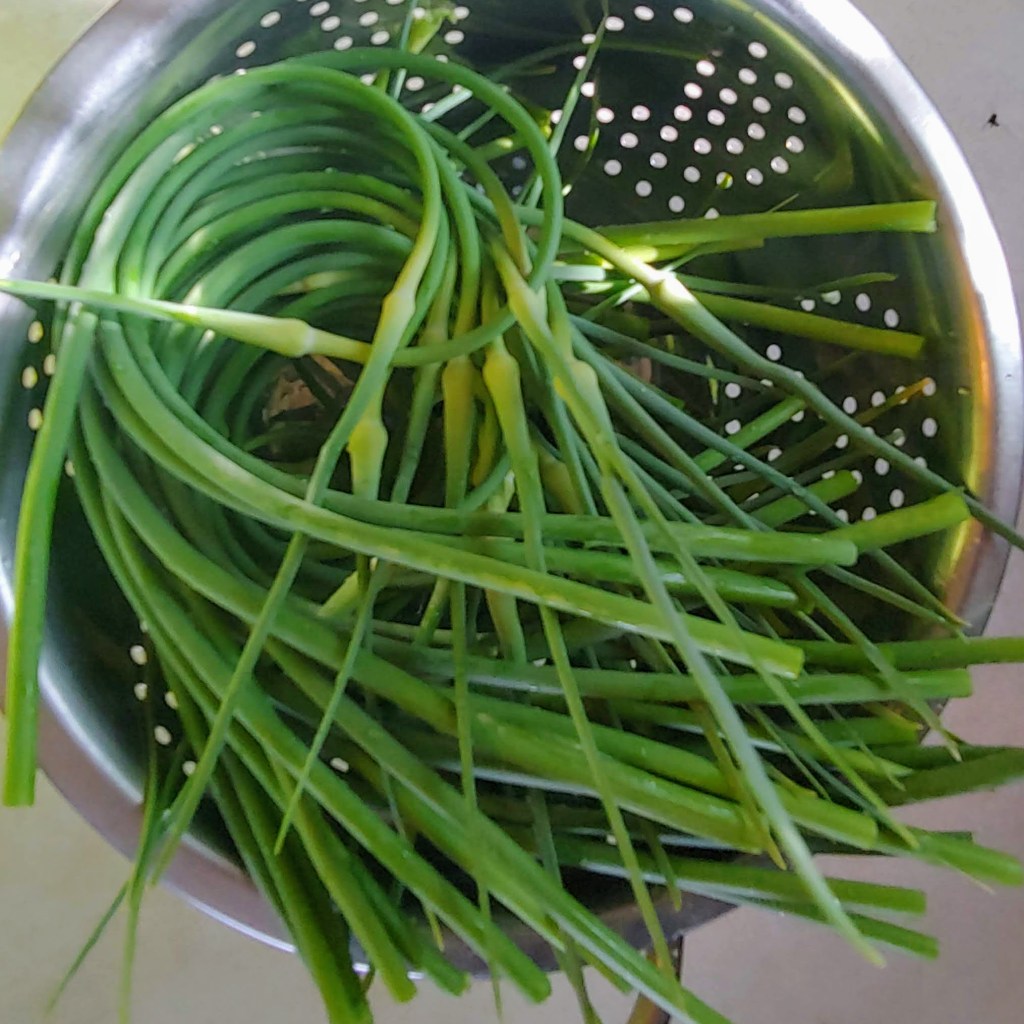
Take that soup example. Most soups call for onions and garlic as a base. But if you don’t have cured onions (the ones with the papery skin), you could substitute for fresh onions, scallions, leeks, chives, or shallots. Garlic cloves could be substituted for garlic scapes or garlic chives. Or maybe you only have onions — double up and omit the garlic completely.
The point of the onion and garlic as the soup’s base is to give it aromatics, to give it that base of flavor. Anything in the onion family (which both onions and garlic are apart of) can be substituted for one another.
Here are some “roles” vegetables typically play in recipes:
- Added nutrients are found in chopped up, cooked greens in a soup, rice, or even pasta dish. Think risotto, a beef stew, or collard mac and cheese.
- Bulk or density in a dish is found when using zucchini, eggplant, mushroom, or nuts. Think ratatouille, veggie lasagna, or quiche.
- Crunch from raw or only lightly steamed/cooked vegetables in a stir fry, rice dish, or a salad can be found from using cabbage, snap peas, apples, fennel, or celery ribs. Think stir fry, salads you find at restaurants, or tuna fish or chicken salad sandwiches.
- Unique, pops of flavor come from the addition of chopped herbs right before the serving of a dish. Think parsley, cilantro, carrot tops, celery leaves, or chives added to the top of soup, rice, pasta, or other recipe.
- Greens that make up a salad are there to add different flavors, textures, and densities. Think beet greens, spinach, chard, kale, dandelion, chicory, mustard greens, arugula, or endive.
Find Other Recipes Using the Veggie
Finding more examples of how a vegetable is used in dishes, particularly when it’s not the main character, can offer lots of clues on how to prepare, serve, and the role it plays to compliment other items in your kitchen.
This typically will give you insight on how or what else can be substituted for this vegetable.
For example: Maybe this week you received collard greens in your CSA share or you picked them up on a whim at the farmers market.
A quick internet search of “collard greens recipe” shows that most recipes call for cooking the greens, vs. eating them raw.
With a search for “how to add collard greens to a meal” shows similar recipes, but it also suggests what flavors and other foods are typically found with or to compliment the collard greens.
From this search, you see that it’s served alongside comfort foods, like macaroni and cheese, corn bread, green beans.
This actually what gave me the idea to start adding collard greens right into our own macaroni and cheese dishes.
But if I didn’t have any collards another green, like kale, spinach, mustard greens, arugula, or chard would work as a substitute in my mac and cheese (and in fact, they have!)

>>> Related: How to Make the Most of Your CSA Share
Is it in the Same Family?
Family can be interpreted in one of two ways when you are thinking of making substitutions in your meals.
- Botanical Family – vegetables from the same genus that are biologically similar
- Type Family – vegetables that look similar, maybe are grown similarly, but don’t share biological similarities (ex: beets and radishes)
Botanical families can often be substituted for one another in recipes, but also not exclusively.
Take for example tomatoes. They are part of the Solanaceae family that includes peppers, eggplant, and potatoes.
I can think of lots of recipes where substituting potatoes for tomatoes would result in a VERY different dish.
That’s when the “type” family can be more helpful.
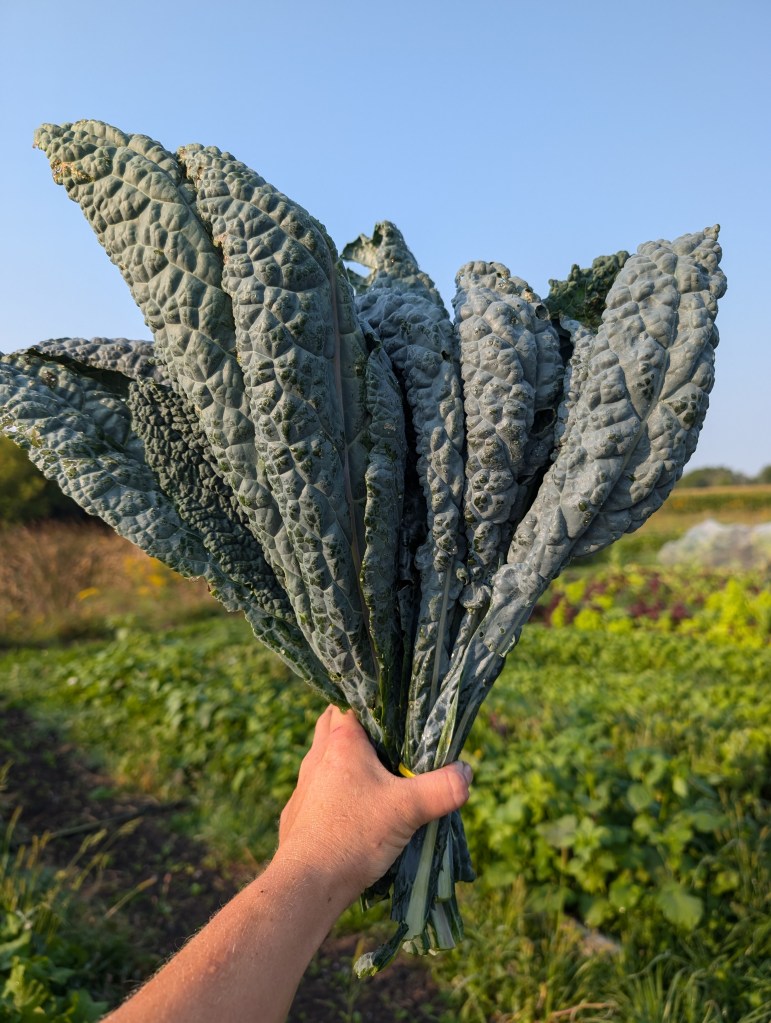
Take for example a recipe that calls for raw kale. It’s part of the family that includes cabbage, mustard greens, arugula, and collards, which could be a substitute in your recipe. But other greens, not in the same botanical family as kale, like chard, spinach, dandelion, radicchio, or sorrel might be just as easily used in its place.
Will it be Raw or Cooked?
I might be in the minority here but I think that whether you are enjoying something raw vs. cooked totally changes what I will use to substitute.
This one might be more about personal preferences regarding flavors and textures, so feel free to experiment here and see how it all boils down for you.
For instance, if I am making up a raw veggie platter, I wouldn’t substitute slices of radishes for slices of potatoes.
However, if I had a recipe that called for roasted radishes but I only had potatoes, I would totally substitute them for one another.
Cooking, whether sautéing, boiling, grilling, or roasting, can bring out different flavors in vegetables, so sometimes substituting takes some trial and error to find out if you can switch things up.
Want to read more? Check out these posts…
 Schul Farmstead