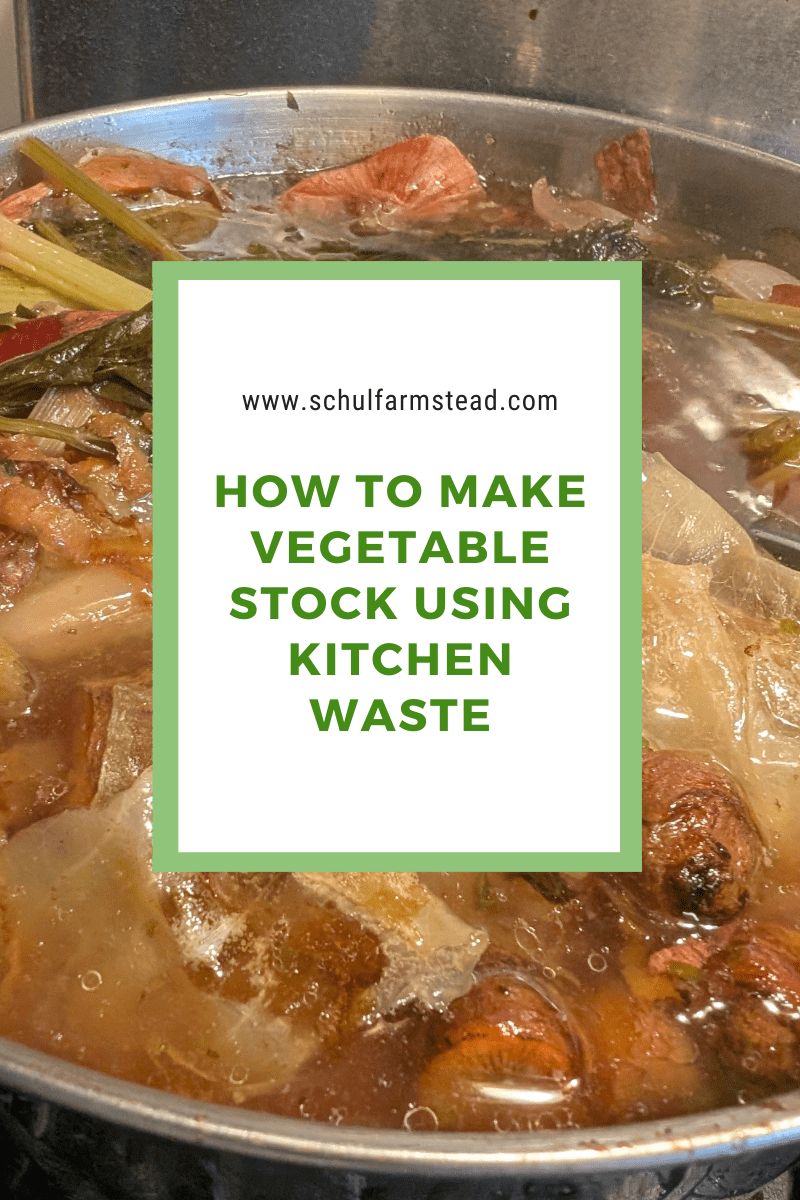
One of the simplest things to make in the kitchen to save you money & use up waste or scraps, is a pot of vegetable stock.
In this post I’m sharing the exact process I use to collect kitchen waste & make a nutrient-dense pot of stock for all your fall & winter soups.
>>> Related: How to Make Winter Squash Soup
What Kitchen Waste is Good for Vegetable Stock?
When I say “kitchen waste,” I’m talking about 4 main things you find in your kitchen as you cook & prepare your other meals:
- the green tops of root vegetables (think: carrot tops)
- thick stems/stalks (think: kale)
- wilted greens (any type of green tops of scallions/green onions)
- skins and peels (think: butternut squash skin, paper layers of onion skins)
To make a robust & flavorful stock, you’re going to want scraps, ends, green tops, & peels of vegetables, like:
- onion, scallions/green onions, garlic scapes, green garlic, leeks
- carrot, beets (greens only), turnips, rutabaga
- butternut, acorn, pumpkin squashes
- kale, collard greens, mustard greens, chard (stalks or leaves)
You can also add in fresh herbs, greens, mushrooms, and even bones from chicken or turkey if you desire.
How to Collect Kitchen Waste
If you’re planning to make a large batch of vegetable stock (which is how I do it), then it does take time to “collect” enough scraps & waste.
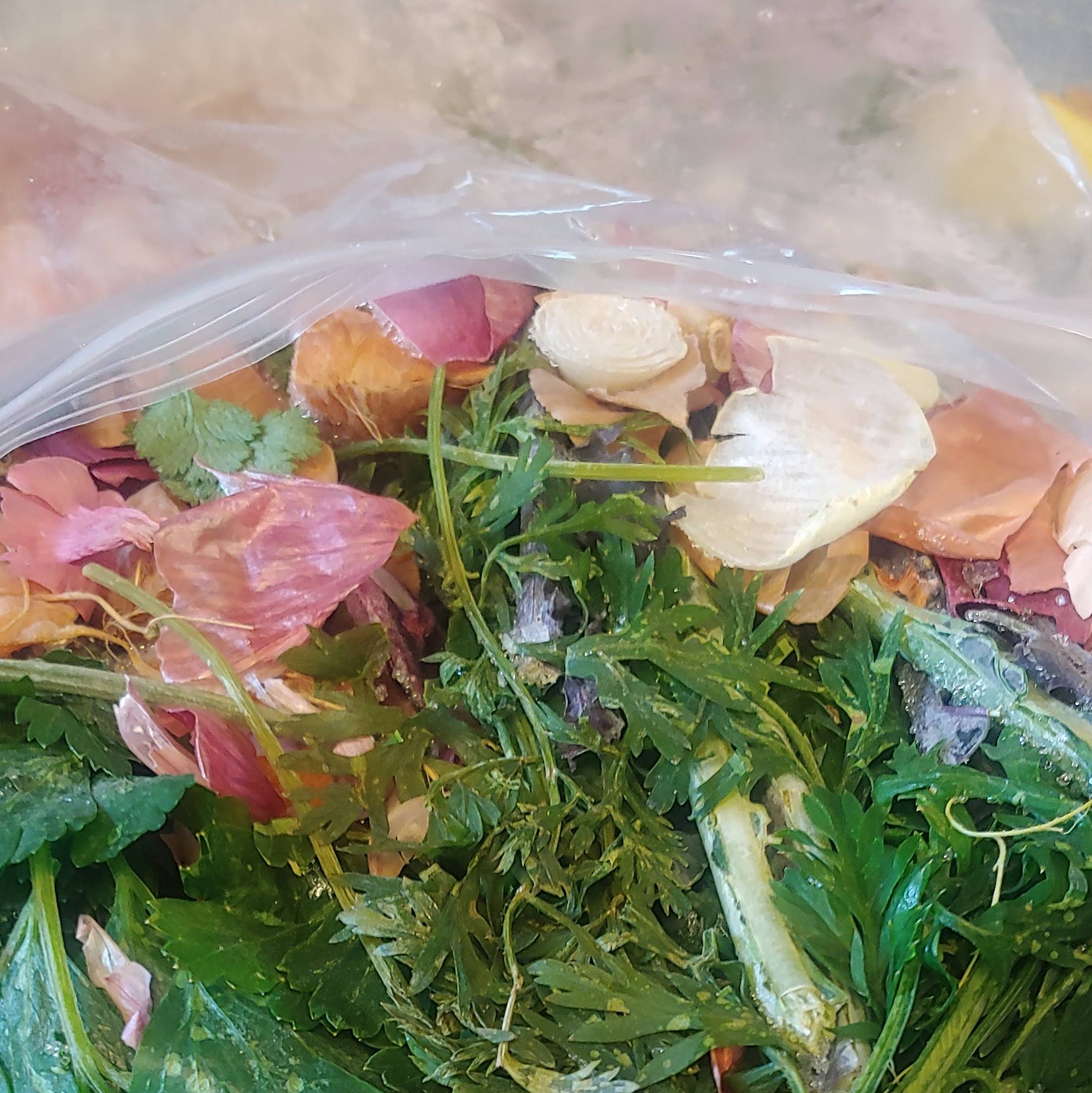
To create a simple process, I have a gallon bag that I keep in the freezer in my kitchen that I constantly add scraps to.
As I prepare meals, I use a small bowl to collect waste.
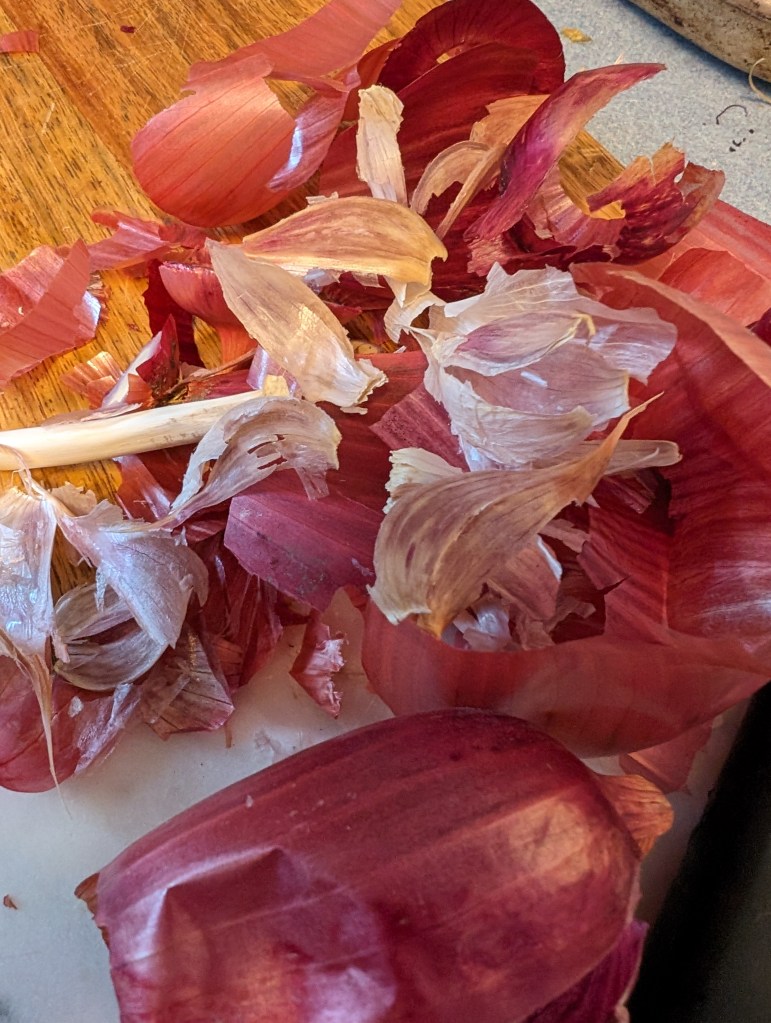
As I’m chopping onions, I place the ends (with the rootlets) & the top in the bowl. As I peel the outer, papery layers, & then the first layer of onion, those go in the bowl too.
If I’m peeling butternut squash or carrots, the peels go in the bowl.
If I’m chopping kale, the stems & rib go in the bowl.
(I think you get the idea)
When I’m done prepping or cleaning up, I’ll toss the items from the bowl in the freezer bag.
It typically takes a few weeks for me to fill the freezer bag.
Adding to it as I go & make meals is an easy habit I’ve created in my kitchen.
So easy & beneficial, that even my husband will put scraps in the freezer bag when he’s prepping & cooking.
>>> Related: How to Use Kitchen Waste
Making the Vegetable Stock
When I have a full bag (or some times 2 full bags) & when I have a day where I’ll be at home, I’ll make a pot of stock.
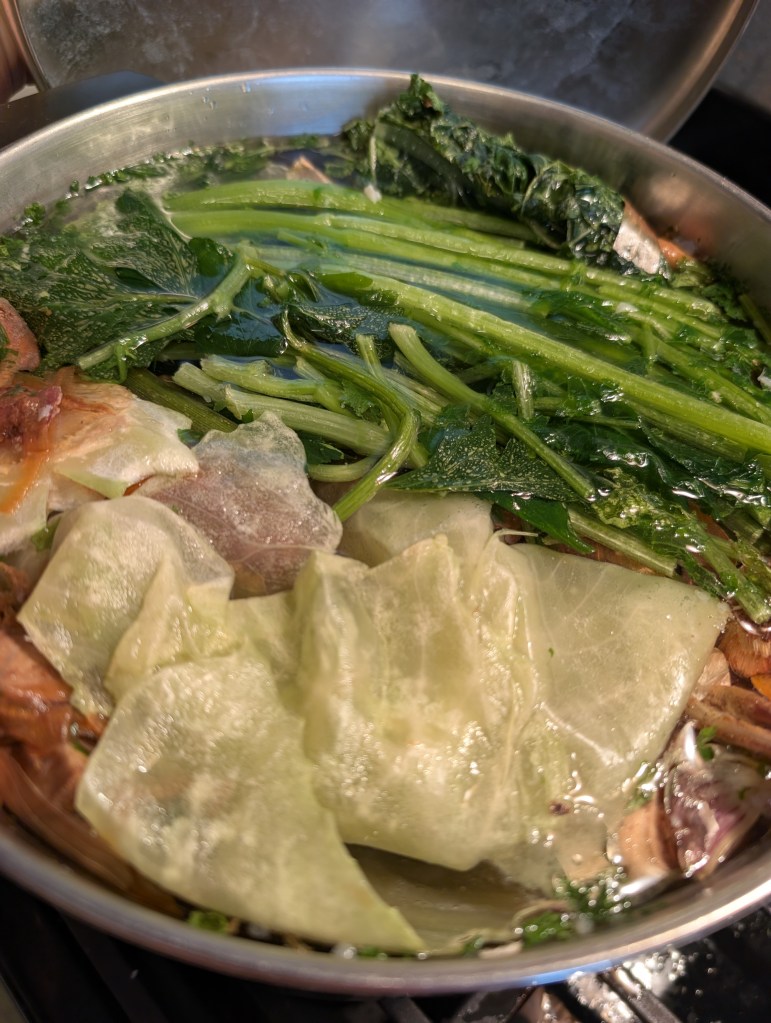
I take a large stockpot (mine is probably a 16 quart pot) and dump the contents of the freezer bag(s).
If I have a chicken carcass or turkey carcass frozen in the freezer, I might add that too.
But if I just have veggies, I’ll just use those. I just label it appropriately after I make the stock.
Depending on my mood, what I have on hand, etc. I might chop and add garlic, fresh or dried herbs, salt, pepper, mushrooms or mushroom powder, or even a tablespoon of my farm’s Herbal Broth Mix.
Then I fill the pot the rest of the way with water.
I cover the pot & bring the mixture to a boil.
Then I’ll leave it on the stove to simmer for a few hours (usually 3-5 hours, depending on what I’m doing.)
After it’s simmered, I’ll stain out the kitchen scraps.
Typically, I end up pouring the stock into quart mason jars (2.5 cups -3 cups), bound for the freezer.
Sometimes my “mason” jars are reused salsa jars, marinara sauce jars, and other glass jars from the grocery store.
If you will be freezing in glass, make sure you leave 1-2″ of headspace to allow for the liquid to expand as it freezes.
Then label the top & put it in the freezer.
How to Use Vegetable Stock After Freezing
I’d like to tell you I’m an organized person, & I pull things out the the freezer ahead of time to use them to make something.
But…that’s not the season of life I’m in.
Sometimes I get lucky & preplan when I’m going to make soup or a meal that calls for vegetable stock/broth, so I’ll pull the jar out & let it defrost on the counter or in the fridge.
But most of the time, I’m pulling out a jar, unscrewing the top, & letting it partially or fully melt in the microwave.
So I can say with confidence, no matter where you fall in meal prepping, when you pull your stock from the freezer (if it’s in a glass jar) you’ll be able to use the vegetable stock with relative ease.
Looking for more recipes you can make using my farm’s pesticide-free vegetables?
 Schul Farmstead