
Root veggies are the ugly duckling of the vegetable world.
You have your crisp and fresh lettuce leaves, your stunning red tomatoes…but a rutabaga? turnip? winter radish? These are stout, hardy, and grizzled.
Root vegetables are a staple in fall & winter farmers markets, CSA shares, and recipes.
But if you never grew up eating root veggies, or the way in which they were prepared made you swear off eating them forever, where do you even begin on your journey to loving and enjoying them?
Before we dive in, I will preface this by saying you will notice a few root vegetables missing – beets and carrots. Personally, I feel that carrots are well-known and well-loved enough to warrant being left out of this post and beets have camps – you either love or hate them.
I’m reserving this post for vegetables that I notice are ignored or I get asked the most questions about when I’m at the farmers market. There’s more of an aura of mystery around them because folks have become less acquainted with them in the States in recent decades.

What is there to LOVE?
Most root veggies are planted in August & September, spending months underground before they are harvested as colder weather approaches or arrives.
If your grandparents or great-grandparents ever talked about a root cellar, root veggies were absolutely something they were referring to.
Kept in high humidity environments only above freezing, these varieties can last MONTHS.
They will even store for a longer time than most other vegetables will in your fridge’s crisper drawer.
So what? What is there to love about them?
Their long storage capability – even in your own refridgerator.
SOOOOO many people ask me how to store their vegetables so that they last longer in the fridge. Many folks complain about the lack of storage life on many vegetables they buy from the market and the grocery store.
But root vegetables? They do LAST! And that is something to love about them.
If you find yourself struggling to eat through your CSA share or weekly farmers market haul, don’t skip the root vegetables.
Start find recipes to use them in alongside the items that need to be used within a few days of arrving at your home.
Root veggies, if their leaves are removed and they are stored in a bag in your crisper drawer will last weeks, if not months.
Think of them almost like a pantry item – a box of spaghetti noodles, a bag of rice – that are waiting for when you need to quickly throw something together for dinner that you hadn’t really planned on…

How Can I ENJOY their flavors?
Let’s identify a few root vegetables so you can learn to appreciate their individual flavors.
And then we’ll dive into each one with some suggested recipes.
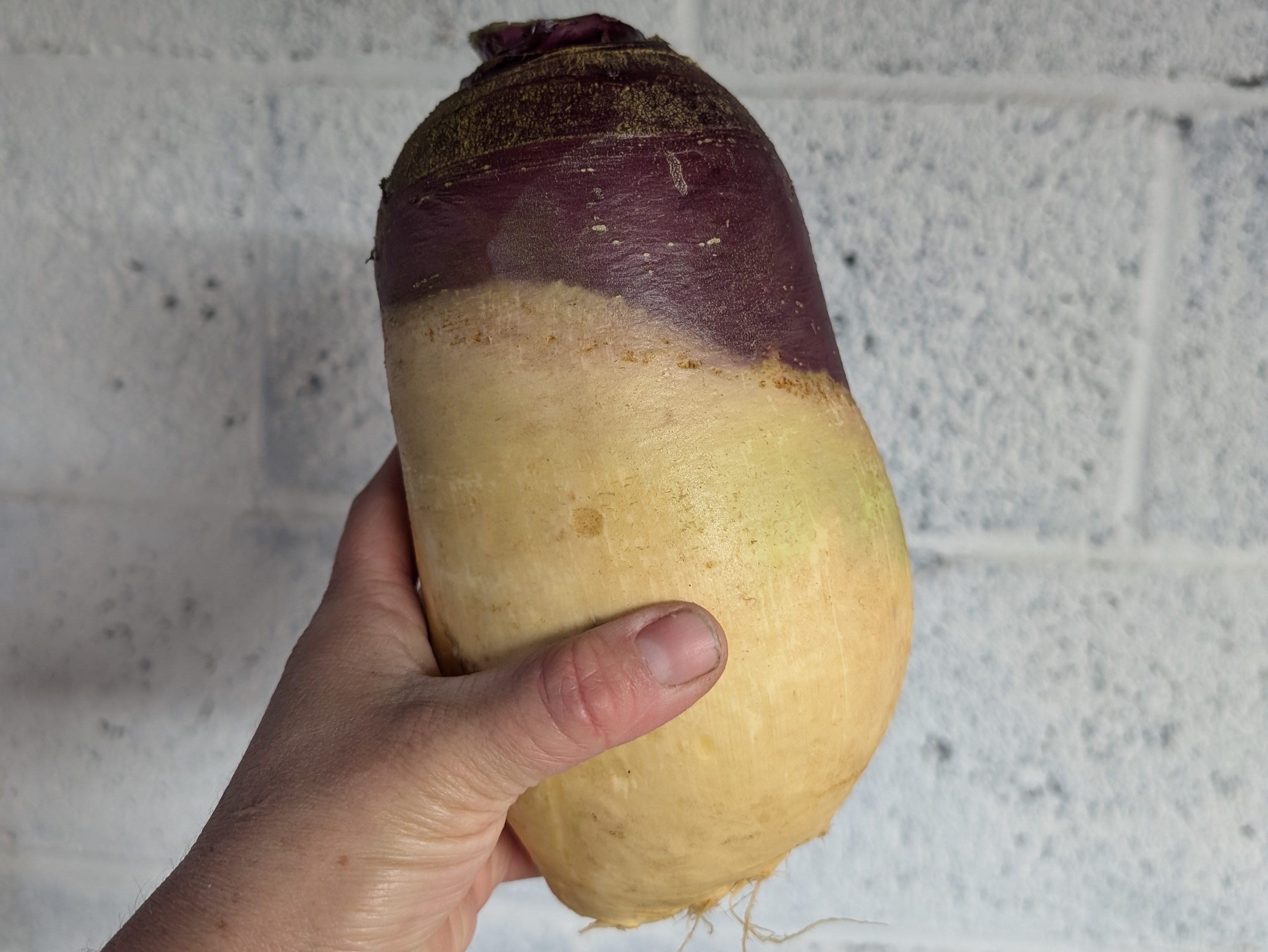
Rutabaga
Rutabagas are found at the farmers market from late October through the New Year. They take about 100 days to grow their robust roots, so I plant them on the farm in mid-July.
They’re known as neeps, swedes, and snaggers in other parts of the world.
If you’ve bought them at the grocery store before, you’ve liekly bought them with a layer of wax trapping in moisture of the root to increase storage life. We refrain from adding wax to our rutabagas, so you don’t need to peel ours.
Rutabaga’s flavor is mild and slightly sweet with just a hint of black pepper spice. Of the root vegetables they are the much milder of the group.
They are a good substitute for potatoes if you are looking to add more depth of flavor to a recipe but want to keep textures the same.
When they’re roasted, they turn creamy and sweet. Or you can mash them like potatoes and enjoy them mixed in with potatoes or on their own.
Some recipes to try:
- Icelandic Lamb Stew
- Turkey Veggie Stew with Rutabaga & Parsnip
- Rutabaga & Beef Stew
- Lentil Vegetable Shepard’s Pie
Turnips
You’ll find turnips at spring and fall & winter farmers markets and in CSA Shares. They prefer growing in cooler weather and turn very spicy when you do grow them in the heat of the summer, if they don’t just bolt and try to seed out immediately. Turnips take about 40-60 days to grow, and there are multiple varieties.
I prefer to grow the Japanese snow turnips (aka: Haukerui turnips, salad turnips) in the spring. They’re beautifully white, soft like a salad radish, and can be eaten raw or cooked.
For fall and winter harvests I grow the traditional purple-top globe turnips and heirloom scarlet (they’re more hot pink) turnips.
Turnips have a slight spiciness – so they have a mix of flavoring of a potato and a radish.
The spiciness, or heat, is more like horseradish (or wasabi) where you feel it in your sinuses, not on your tongue like a hot pepper. results in a flavor that’s somewhere between potato and radish.
If you think of it kind of like wasabi-flavor, you can see why there are lots of Asian dishes with turnips and ginger. They’re a very nice combination because they are both strong flavors.
Honestly any kind of root veggie, whether it’s turnips or rutabagas can be eaten raw. There is no law against it, just preference and experience.
Like all root vegetables, turnips shine when they are roasted. Their flavor mellows and their sweetness is concentrated.
They absorb the flavors in your braising liquid too, including the spices and herbs, and just generally mellow out. Which is why I love them in soups. You can also add them to soups, in place of potatoes and most folks will not notice the difference.
If you think of what you like to do with potatoes, you can do the same things with most root vegetables, including the turnip.
You can also often find turnips with their greens still attached. Their greens have a lovely mustardy taste and are delicious when cooked. If you’re not sure what to do with the greens, you can read my blog post 5 Ways to Incorporate More Greens.
Some recipes to try:

Parsnip
Although this looks like an oversize white carrot, parsnips have a somewhat nutty flavor that sweetens as its roasted.
Found often in English cooking, I’ve not grown parsnips on the farm since they tend to spend over 120 days in the field….from April to December….and that’s just a lot of time to spend on a crop when my space has been limited to grow in.
I’ve tended to use parsnips in soups and stews, since their flavor is muted in the mix with the rest of the flavors in the pot.
However they work very well in beef recipes, like sheppard’s pie, beef stew, etc.
Some recipes to try:
Daikon or Watermelon Radishes
Ahh the long winter radishes. This radish “family” hails from Asian with many varieties. These varieties thrive in the cooler temperatures of the early fall and are typically planted on the farm in August or early September to begin being harvested in mid-late October for the late fall and winter farmers markets.
Like your typical round, red, salad radishes, these winter radishes can be eaten raw or cooked.
Unlike the small round, red salad radishes, these radishes are more mild in flavor, tending to be more sweet and lightly spicy (spice as in black pepper, not heat like a hot pepper).
They are very crunchy and juicy.
These radishes shine when they are roasted or braised, but they can be a beautiful part of a veggie platter for the holidays.
Some recipes to try:

Sunchokes
Ahhh the sunchoke. Or Jerusalem Artichoke. Whichever you prefer to call this native perennial tuber.
These grow “wild” all over Niagara County. In September you’ll see patches of what look like mini sunflowers along ditches or in hedgerows or untiled land.
These tubers are grown underground like a potato and have been cultivated by indigenous peoples for centuries. I ahve two patches of these perennial vegetables on the farm and they can grow everywhere if they’re not contained to a specific area.
I bring them to the winter market – preferring to harvest them after a frost – and can continue harvesting them until the ground is frozen solid.
They’re a mildly sweet, crunchy, and nutty edible tuber that is also highly nutritious.
Unlike potatoes, this tuber contains no starch, but rather carbohydrates in a form that is metabolized into natural sugar. So if you are diabetic these are a fantastic potato substitute.
Sunchokes require a careful washing before cooking because dirt can get trapped in all those knobby bits.
You don’t need to peel them before cooking them, though you can if you like (this skin is papery and thin). Once washed, cut them into thick slices or chunks and prepare them the same way you would potatoes.
Sunchokes can be substituted in any recipe calling for potatoes. Boil, mash, roast this tuber for a tasty side dish.
Some recipes to try:

Celery Root
Celery Root or celeriac looks like stunted celery when it grows in the field. But up close, you can see this massive tangled of rootlets surrounding a white ball.
Of all the root vegetables, celery root liekly takes the prizes for ugliest.
When peeled, it’s white interior can be eaten raw or cooked.
It has a flavor similar to celery stalks, but with a slight nuttiness. And when roasted, it gains sweetness.
Some recipes to try:

I truly hope this profile on root vegetables gives you a better idea of the variety of flavors that abound in this “group” of vegetables.
And I hope you’ll give some of the recipes a try.
Not all root vegetables have to be boiled and mashed in order to be loved and enjoyed.
 Schul Farmstead
7 thoughts on “How to LOVE & ENJOY Root Veggies”