
Microgreens, sprouts, shoots.
These are names that often are tossed around for the same or similar tiny greens that you’ll find at the farmers market and in your CSA shares.
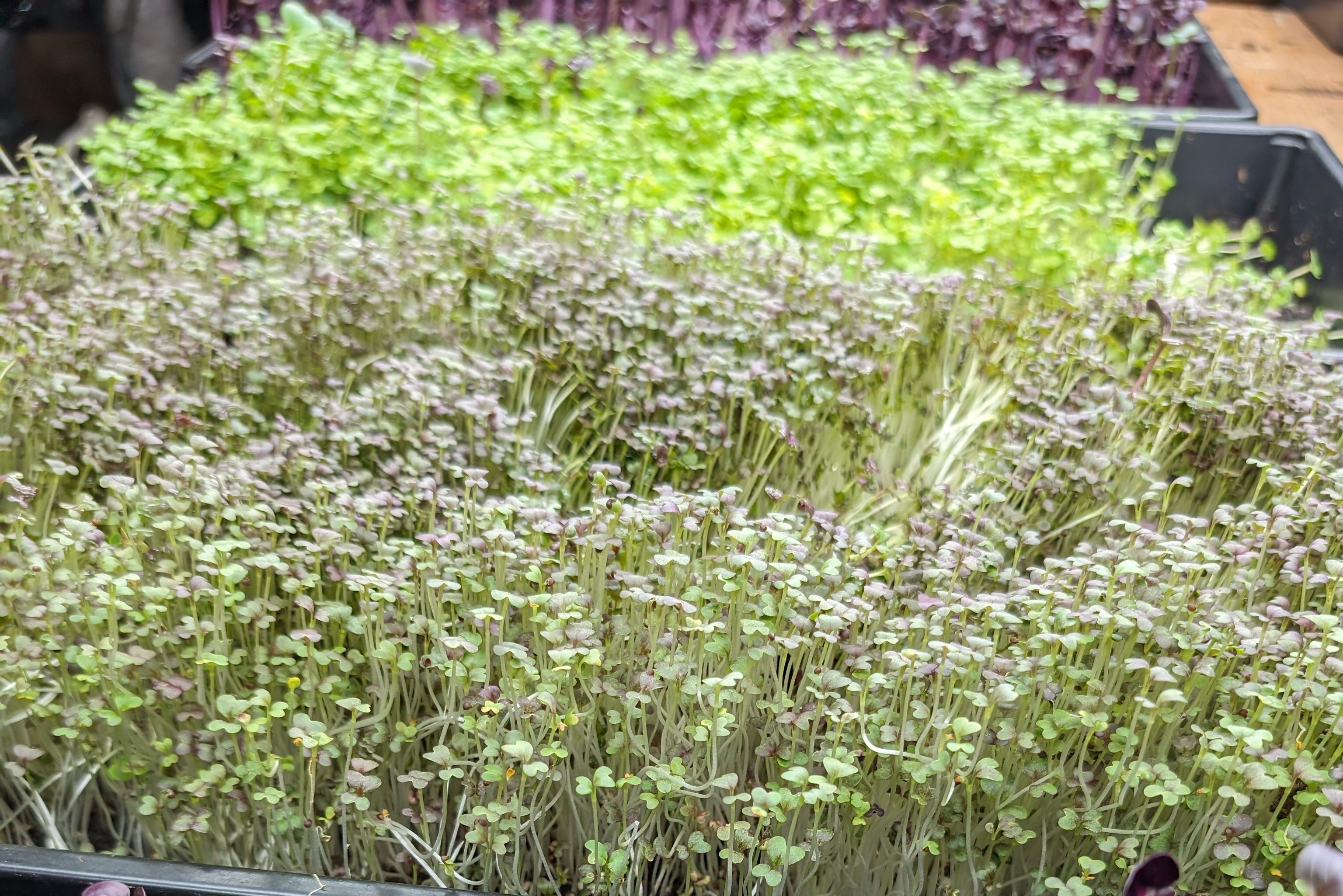
Our farm grows what are botanically known as microgreens – tiny, sprouting plants.
What are microgreens?
Microgreens are the tiny, edible cotyledon leaves (first leaves) that first appear from vegetable or herb seed.
They’re basically baby veggies!
Their flavor is intense and they’re much more nutrient dense than their mature counterpart.
In some varieties, the microgreen version contains more than 40x the nutirents compatred to its mature version.
There are so many different veggies and herbs that can be grown as microgreens – arugula, pea, amaranth, cilantro, basil, radish, kale, fennel, spinach, beet, and more!
If we were to let the microgreens continue to grow, they would be able to be transplanted and planted out into our fields to be harvested as mature varieties of vegetables and herbs.

How our Farm Grows Microgreens
Every farm is different in their set up, but we grow our microgreens in potting mix, the same that is used when we plant seeds and seedlings.
We believe that growing the microgreens in soil is best, given that it allows them to absorb more nutrients and vitamins from the soil medium before they are harvested.
We plant them indoors, about 10-14 days before we harvest them for the market and our CSA shares.
Because our farm does not have a heated green house or large hoop house to grow winter greens like lettuce, kale, or spinach, growing microgreens allows us to provide fresh greens to our customers during the long winter months.
However, we offer microgreens throughout the entire year at the farmers market and to our CSA customers, because we’ve seen such a demand as more folks learn about these nutritious greens!
Microgreen Varieties We Grow
There are many different vegetables and herb seeds that can be grown as microgreens.
I’ve decided to focus on a few varieties of microgreens to grow for our farmers market and CSA customers.
Pea Shoots
Pea Shoot microgreens are great in salads. They add a little bit of crunch and a mild snap pea flavor.
You could also add to a stir fry or other Asian-inspired dish after removing from heat.
Pea Shoot microgreens aid in diabetes and heart health.
They’re high in antioxidants and phytonutrients, which are critical to support the body’s response to inflammation.
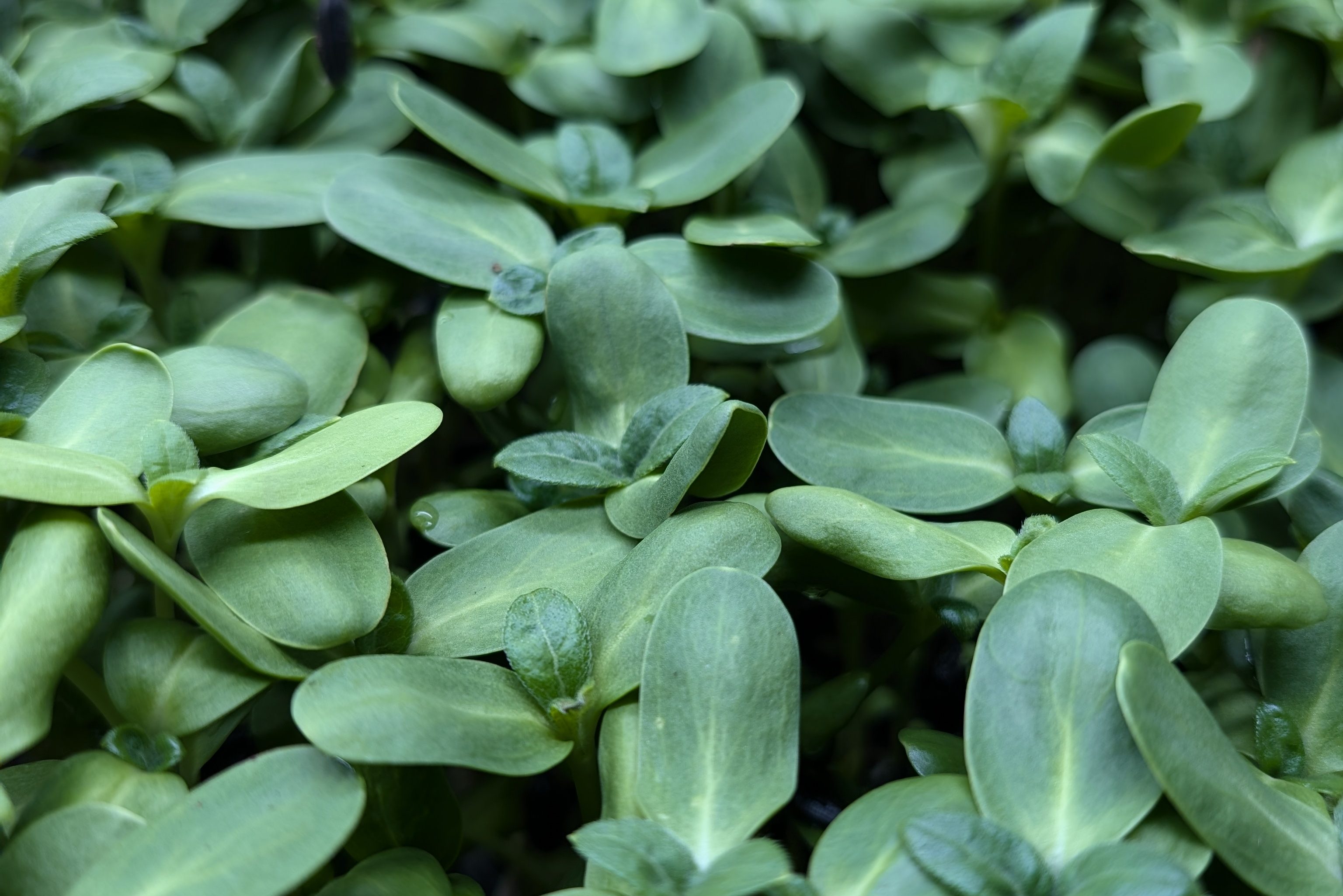
Sunflower
Sunflower microgreens are one of the sweetest and mildest microgreens available.
If a customer has eaten had microgreens before, I typically recommend this variety as an introduction.
Sunflower microgreens are mild, with a slight nutty flavor.
They are rich with protein and amino acids. They also provide calcium for bone health, and trace minerals such as iron, potassium, phosphorus, and magnesium.
Brassica Mix
This is a blended mix of microgreens I’ve developed that gives customers a flavorful punch in their meals.
My blend is a mix of mustard green, arugula, and purple radish microgreens, which are all from the brassica family, hence the name.
Mustard microgreens contain high levels of antioxidants, are high in fiber, and can help detoxify your liver and blood.
The mustard microgreens have a pleasant, spicy flavor, but are more mild than when they are mature leaves.
Arugula is a spicy microgreen that packs a punch (more on this microgreen below).
The purple radish lends a lovely pop of color into the blended mix, as well as a dose of anti-inflammatory properties to reduce swelling and pain in the body.
Purple radish is also a natural diuretic, can aid in reducing blood pressure, and helps to detox the body.
Arugula
Arugula microgreens give a black pepper spice to your dishes.
Like many greens in the brassica family, arugula microgreens provide the body with calcium to aid in bone health.
How to Store & Prep Microgreens
I harvest our microgreens less than 24 hours before they are brought to the farmers market or given out in CSA shares.
In fact, most Friday nights, I harvest the microgreens for the Lewiston Artisan Farmers Market around 7pm or 8pm, so they just over 12 hours old when customers buy them at the market.
I sell our microgreens in small ziplock bags and recommend that customers keep them in the bag in a crisper drawer with the vegetable setting (low humidity).
You should consume microgreens within 3-5 days of purchasing, although I have eaten them at about 7 days old without any issues.
To prepare them to eat, you should remove any seed hull that may still be attached to the plant.
Microgreens should be washed before consuming.
Because they are so delicate, I recommend using a salad spinner.
Gently wash the microgreens in cold water and spin dry. You can also simply dab them with a towel until dry.
How to Use Microgreens in your Kitchen
I recommend that customers who are new to microgreens treat them as a super nutrient-dense herb that they’re sprinkling onto what they’re eating.
When you use microgreens in your meals, you’re supercharging what you are eating with a large dose of minerals, vitamins, and fiber.
Here are a few ways to enjoy them:
- When you make a homemade pizza (or bake the one you bought), add microgreens to the top as soon as it’s removed from the oven.
- Top your burger, sandwich, wrap, tacos, etc. with microgreens, instead of lettuce
- Toss them into your salad
- Garnish your soup, rice dish, quinoa, pasta, etc. with them (like you see chefs do with parsley or other herbs)
- Add them to your smoothie
- Add into scrambled eggs or omlets
- Add to other greens and make into a pesto for pasta
Want to learn more about cooking farm fresh vegetables? Keep reading…
5 Ways to Incorporate More Greens in Your Diet
 Schul Farmstead
2 thoughts on “What are Microgreens & How to Use them”